
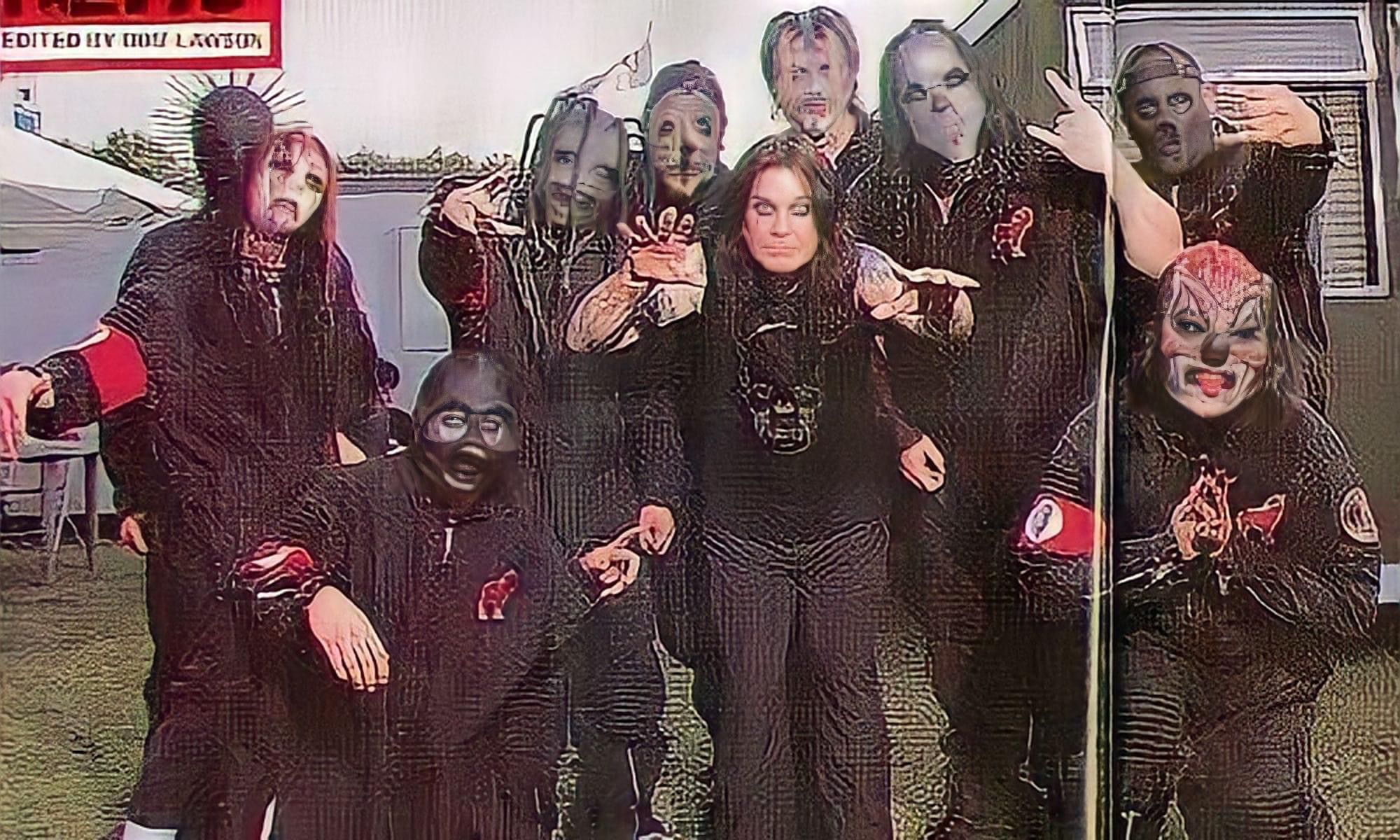
Hay dos cosas que incluso las personas a las que no les gusta Slipknot saben sobre Slipknot. Uno, usan máscaras. Y dos, durante gran parte de su carrera fueron nueve integrantes, actualmente son ocho . Excepto que el cantante Corey Taylor revela que había casi un décimo miembro: Ozzy Osbourne , el mismísimo principe de las tinieblas .
En una entrevista en el nuevo número de la revista Classic Rock, Taylor, recuerda el momento en que el cantante de Black Sabbath, ofreció sus servicios a la banda de metal de Iowa cuando Slipknot apareció en el Ozzfest de 1999 .
“La razón por la que Slipknot entró en el Ozzfest, en 1999, es porque éramos la banda favorita de Jack (el hijo de Ozzy)”, dice. “Sharon nos dio un poco más de libertad por eso. Hicimos algunas locuras, pero ella decía: ‘Está bien, es Slipknot’”.
Taylor luego recordó la primera vez que conoció a Ozzy.
“Estaba sentado en una mesa con Jack, Kelly y Sharon”, dice. “De repente, Ozzy llega saltando: ‘Sharon, ¿puedes ayudarme con mis aretes?’ Y Sharon dice: ‘Ozzy, este es uno de los miembros de Slipknot, es Corey, él es el cantante’.
“Él me mira y dice: “¿Ustedes son los chicos con nueve miembros? ¡Quiero ser el número diez! Yo estaba como, ‘amigo, eres Ozzy, ¡lo que quieras!’ Fue como conocer a Superman”.




The contrast between Slipknot’s instantly recognizable visual identity and its changing lineup is worth emphasizing. The masks may be the detail most casual listeners remember, but the shift from nine members to eight also shows how the band’s identity has had to remain flexible over time. That context makes the Ozzy and Corey Taylor anecdote feel less like a random rock-story aside and more like part of a larger conversation about membership, persona, and longevity in metal.
The Ozzy-and-Corey Taylor anecdote works because it frames Slipknot’s famously distinctive identity through an unexpected outsider’s question. The article also notes the shift from the band’s long-standing nine-member image to its current eight-member lineup, which gives newer listeners useful context. That change makes the story feel less like a random metal anecdote and more like a reminder that even iconic bands continue to evolve.
The detail about Slipknot moving from nine members for much of its career to eight now is a useful reminder of how strongly the band’s identity has been tied to its lineup. Even listeners who do not follow every album tend to recognize the masks, the large ensemble, and the collective stage presence. That context also makes the Ozzy story more amusing: imagining an already-iconic figure stepping into such a tightly defined group adds another layer to the anecdote.