
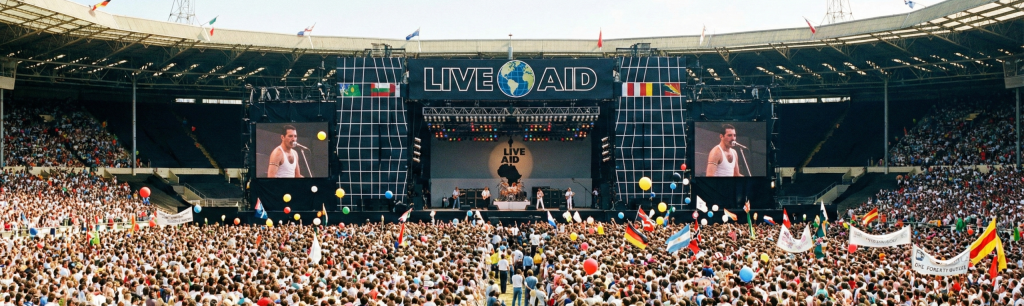
Live Aid is remembered as a heroic moment in music history. Two massive concerts, one in London and one in Philadelphia, broadcast globally to raise funds for famine relief. Rock stars united for a cause. Music changing the world.
But behind the powerful performances and emotional speeches, Live Aid was also a complex, imperfect, and controversial event that history often simplifies.
A Global Broadcast Never Attempted Before
Live Aid wasn’t just a concert—it was a technological experiment.
Broadcasting live across continents, time zones, and satellite systems was incredibly risky in 1985. Delays, signal failures, and technical issues were constant threats. The fact that millions of people watched simultaneously was a massive achievement, but far from smooth.
Not Every Artist Was Comfortable Being There
Some musicians felt genuine passion for the cause. Others felt pressure.
Publicly declining Live Aid could damage reputations. Quietly, several artists worried about oversimplifying a humanitarian crisis or turning suffering into spectacle. These concerns rarely made headlines—but they existed.
Queen Didn’t Know They Were About to Redefine Live Performance
Queen’s Live Aid set is now considered one of the greatest live performances in rock history.
At the time, it was just a short slot. No elaborate stage show. No second chances. Freddie Mercury walked onstage with absolute confidence, not knowing this performance would later define the band’s legacy.
Live Aid didn’t just raise money—it reset the standard for live performance.
Charity, Media, and Reality
While Live Aid raised unprecedented funds and awareness, it also sparked debates about how aid was distributed and whether music events could truly address complex global crises.
Live Aid mattered—but it also exposed the limits of celebrity-driven activism.
Why Live Aid Still Matters
Live Aid proved that music could mobilize the world in real time.
It showed both the power and the fragility of global unity.
It wasn’t perfect—but it was unprecedented.